Explore, protect, promote
ME-ARCH-0180
Record Date:
19 November 2020
Graveyard:
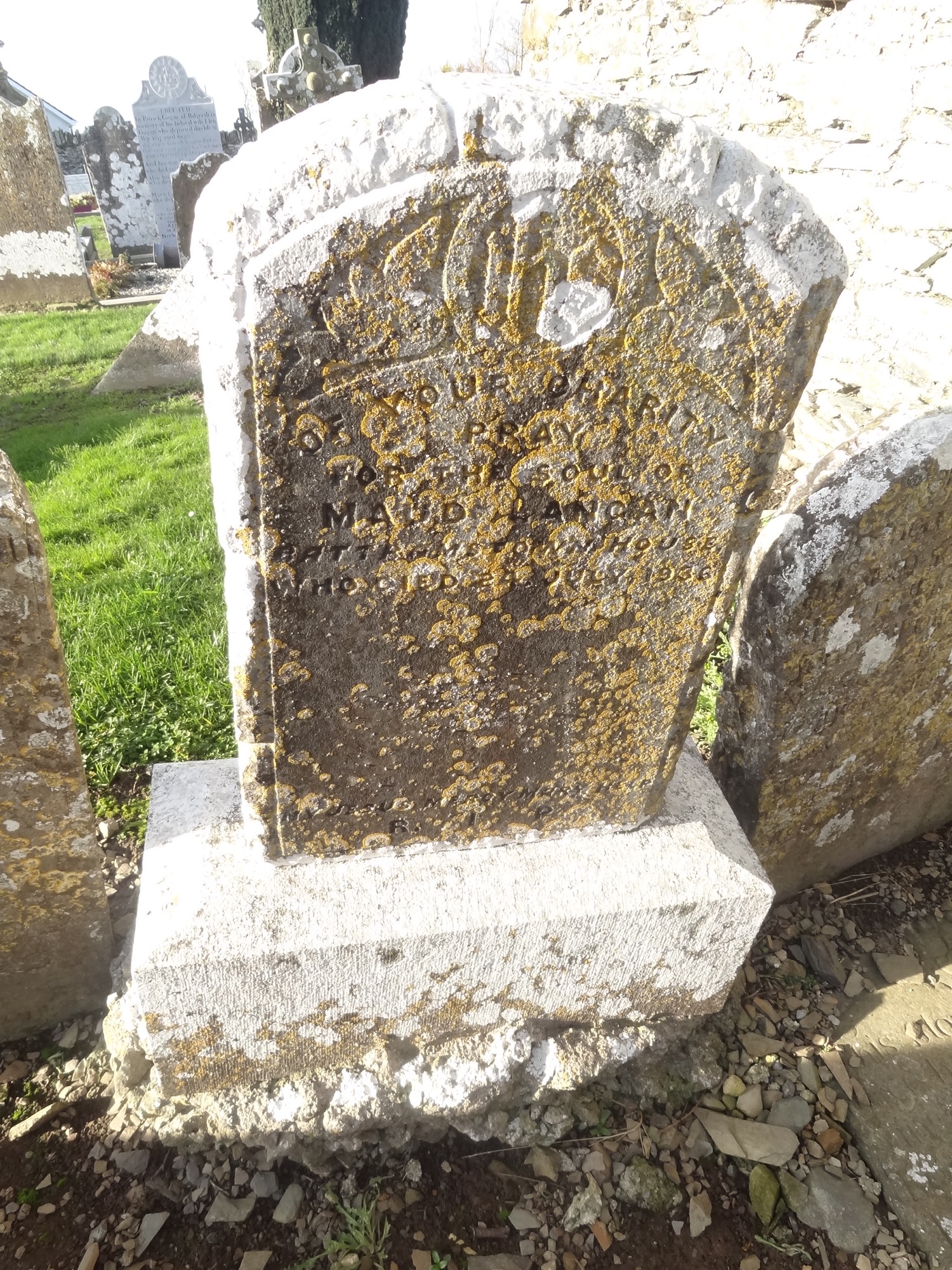
Exact wording of epitaph:
I H S
OF YOUR CHARITY
PRAY
FOR THE SOUL OF
MAUD LANGAN
BATTRAMSTOWN HOUSE
WHO DIED 24 JULY 1936
MY JESUS MERCY MARY HELP
R. I. P.
Memorial Type:
Headstone
Number of people commemorated:
1
People commemorated:
Name:
Maud
Surname:
Langan
Date of death - day:
24
Date of death - month:
July
Date of death - year:
1936
Address:
Battramstown House
Notes:
John Langan associated with Bartramstown House, Cloghertown, was born circa 1790 and died in 1872.
- Birth and Death: He was born in Ireland around 1790 and passed away on December 23, 1872, at approximately 82 years of age, in Prienstown, County Meath, Ireland.
- Residence: His name is linked to Bartramstown House, a property located near Cloghertown and Garristown in County Meath. The house was advertised for sale by the estate agent Ray White, indicating it has been a private residence at various points in its history.
According to historical land records, specifically the Griffith's Valuation, John Langan held land and property in the area in the mid-19th century. The valuation was completed for County Meath between 1847 and 1864 and records all rateable property in Ireland at that time.
The records confirm the following regarding the Langan family's land ownership near Cloghertown:
- Valuation Details: John Langan is listed in the Griffith's Valuation as occupying property in the townland of Bartramstown, within the parish of Cloghertown (also known as Killegland) in the Barony of Upper Duleek.
- Property Type: The records likely detail that he leased a house and land, which was typical at the time. The house associated with the family is Bartramstown House, a large private residence.
- Context: The Langan surname itself is an Anglicisation of the Irish Ó Longáin, meaning "descendant of Longán", and the family name was relatively common in Ireland, with various branches in different counties